Why Tech-Brain Often Misses the Human Element: A Lesson in Real-World Change
Not long ago, I shared a post celebrating the launch of my newly redesigned Mind & Body Coding Systems store. After years of working with people to help them build genuine confidence, quiet anxiety, and design a life that actually fits them, I wanted a central space where folks could grab practical tools that cut straight through the fluff.
Shortly after posting, a gentleman with a heavy tech and AI background chimed in. Operating from a world of data, algorithms, and deep learning, he looked at practical mindset frameworks and essentially dismissed them as theoretical noise.
It got me thinking about a fascinating gap in how we view the world—and why trying to run human life through a machine-logic filter rarely works. But more than that, it highlighted a broader conversation worth having about how we approach personal growth, emotional well-being, and real-world change in an age increasingly obsessed with automated fixes and cold metrics.
First a supportive "like," then a critical comment—captures the split-second ways our filters work. We want to show support, but our default lens quickly takes control, especially when something challenges our usual way of thinking. That's the paradox of online connection: we're wired for both affirmation and analysis, often in the very same interaction.
Part 1: The Modern Obsession with Systems and the Human Blind Spot
To someone living purely in that logical space, if a problem can't be charted on a spreadsheet, tested in a sandbox environment, or compiled through a clean system, their default pattern is to assume it lacks substance. They look at emotional wellbeing, self-worth, or behavioural shifts and subconsciously wonder where the raw data is. They look for lines of code or clear input-output loops.
The trouble is that human beings are wonderfully, beautifully messy. We're not lines of code running on a tidy server. You cannot simply debug a lifetime of built-up anxiety with a quick software patch, and you certainly cannot build genuine, unshakeable self-belief by staring at a line graph or reading an abstract theory.
When you spend all your time looking at the world through algorithms, you risk developing a blind spot for the kinaesthetic-feeling, lived reality of being a person. You forget that before any data can be logged or any system built, there is a human being sitting behind the screen navigating fear, doubt, excitement, and uncertainty.
Part 2: Why Traditional Self-Help Earned Its Bad Reputation
To be completely fair to the sceptics out there, traditional self-help has done itself no favours over the years. Walk into any self-improvement section of any bookshop, and you'll likely find shelves groaning under the weight of books packed with high-level theory and empty, glossy cheerleading.
Many of us have read them. They tell you to "just think positive," or they command you to "find your inner greatness" without ever giving you a map on how to get there. They treat human emotion like a switch you can flip from off to on. When those vague, sweeping statements inevitably fail to change a reader's day-to-day reality, people walk away feeling like they're the problem. They think, "Well, I read the book; why am I still anxious?"
That frustration is entirely valid. Empty theory leaves people stranded. It gives them a destination without a vehicle, telling them to cross the desert without giving them water or a compass.
Part 3: Decoding the Mind: How Actual Behavioural Change Works
This is where practical frameworks like NLP (Neuro-Linguistic Programming) and CBT (Cognitive Behavioural Therapy) change the game. Far from being abstract or magical, they are grounded in the mechanics of how we process experience.
Think about how you remember a past event that upset you. Where do you see the image in your mind's eye? Is it bright and close, or dark and far away? What tone of voice do you use when you talk to yourself inside your head when things get tough?
Those are not rhetorical questions—they are the literal building blocks of your internal experience. In NLP, we look at what we call submodalities: the structural qualities of our thoughts. If you change the structure of a thought, the emotional impact changes right along with it.
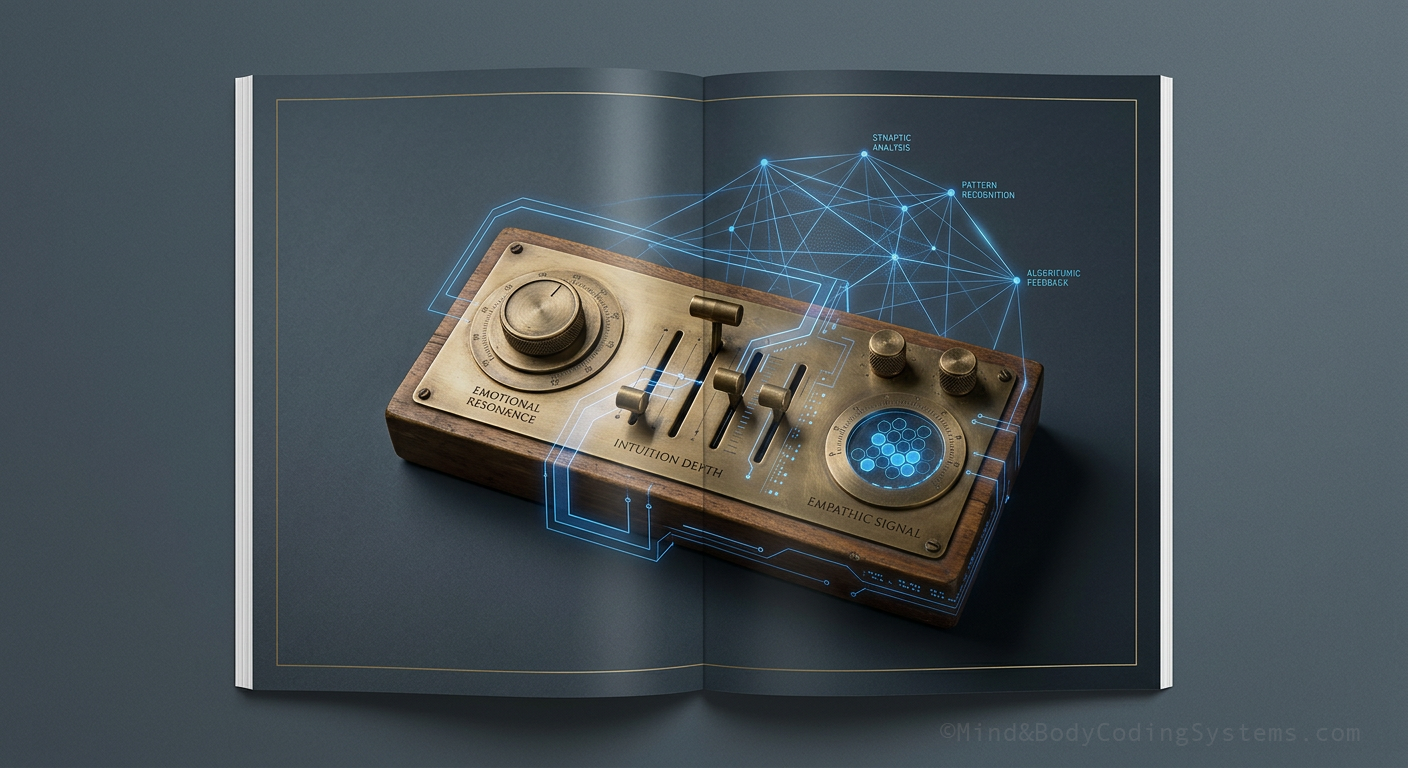
Imagine turning down the internal volume of a critical voice until it sounds like a cartoon character, or pushing a stressful mental image away until it shrinks into a tiny dot. Suddenly, the panic subsides. That's not magic; that's practical mental engineering. It's learning how to operate the control panel of your own neurological responses rather than letting your automatic patterns run the show.
Part 4: The Story Behind the Books: From Theory to Practice
When I set out to write books like The Confidence Toolkit and Overcoming Anxiety with NLP & CBT, I didn't do it from an ivory tower. Those pages were forged in the trenches of real life, drawing on personal experiences, hurdles overcome, and years of working alongside everyday people who just wanted real answers.
I wanted to create resources that didn't just sit on a shelf looking pretty, but actually rolled up their sleeves and got to work. When someone picks up The Confidence Toolkit, they aren't getting a lecture on why confidence is a good thing. They are getting a step-by-step toolkit designed to rewire how they perceive their own capabilities.
Real change happens when you stop trying to bypass your emotions with positive thinking and start learning how to restructure them. It's about understanding that your mind is a learning machine—it learned how to be anxious, and just as importantly, it can learn how to be calm, focused, and resilient.
Part 5: Bridging the Divide: What Happens When Logic Meets Lived Experience
It's entirely natural for analytical thinkers to look at emotional mastery with a raised eyebrow. When you're trained to look for hard proof and predictable systems, anything involving the human heart and mind can look a bit slippery.
But true wisdom isn't about dismissing what we don't immediately understand; it's about expanding our toolkit. The most effective people in any field—whether they're building software platforms or running businesses—recognise that mastering oneself is the ultimate competitive advantage. You can have the most advanced technology in the world, but if the person operating it is burnt out, plagued by self-doubt, or trapped in a loop of anxiety, the system breaks down at the human interface.
When someone from a hyper-analytical background looks at behavioural change and calls it fluff, it usually just means they haven't yet seen the mechanics up close. They're trying to measure a human experience using tools built for a computer screen.
Conclusion: Mastering Your Mind is a Practice
Ultimately, real transformation isn't about winning arguments online or defending philosophical turf. It's about finding what actually works when life throws challenges your way.
If you're tired of the guesswork, tired of the empty theory, and ready for tools that create genuine, measurable shifts in how you operate day-to-day, take a look around the store. Explore the books, tune into the mindfulness tracks and video extras in Inner Calm, and see what fits your goals.
Because mastering your mind isn't a theory you memorise—it's a practice you live.
- Chris Anderson